Show Related CategoriesCategory
Hanging
Post Mounted
Wall Mounted
Freestanding
Butterfly House
Insect Hotels


30 Items

By Dakota Fields
Bumblebees are known to be peaceful and hard -working beneficial insects in the garden. Since they start pollinating ornamental and useful plants very early in the year, their work is particularly valuable for any gardener. From around March onwards, it is worth setting up the bumblebee nesting box outside so that the animals can start working. It is protected from rain and snow by red bitumen roofing felt. The feet of the bumblebee box also prevent the interior from cooling down above the ground and preventing moisture from damaging the nesting aid. In addition, the nesting box has a wax moth flap that protects the bumblebee nest from the pests. Further features of the nesting box are a lockable entrance with a running tube, a hinged roof and air holes on the side. The preparation for the successful settling of a bumblebee colony is very easy, as the bumblebee box is pre -assembled and natural sheep's wool is included as filling material. Since the annual bumblebee colonies die in autumn, the bumblebee box should be stored dry in winter and the filling material replaced so that it can be populated again next spring.

By Dakota Fields
The insect hotel kit offers you the opportunity to plant various wild bees and many other beneficial insects directly in your garden. Against the background of changing landscapes with fewer and fewer natural nesting sites and the associated reduction in insect diversity, you can make a valuable contribution to nature conservation. In addition, your garden also benefits from the small residents of the nesting aid, which excel at pollinating your plants and controlling pests. With the drill holes in the back wall, it is also possible to hang the insect house on trees and house walls. The beehive is made of robust pine wood (Pinus sylvestris, main type of wood) from European forestry, which can be assembled quickly and easily thanks to the practical plug-in system. In addition to a PONAL wood glue bottle, the kit contains high-quality natural filling materials such as reed stalks, pine cones, wood wool and pieces of branch. The nesting holes in the branch pieces must be drilled, useful tips can be found in the detailed, illustrated assembly instructions.

By Paper High
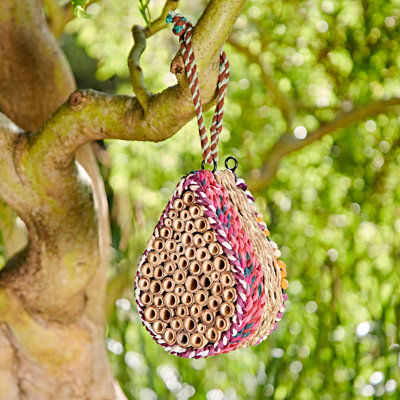
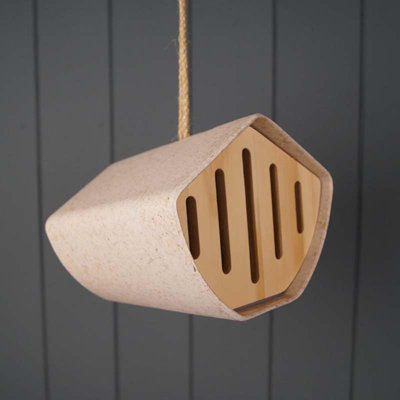
Offer solitary bees and other beneficial insects a cosy place to shelter with this beautifully handcrafted teardrop bee and bug nester. Perfect for adding character to your outdoor space, it also makes a thoughtful, eco-friendly gift for nature lovers and gardeners.

By Dakota Fields
This handcrafted bumblebee house to encourage beneficial insects into your garden. This solitary bee and wasp house provides the ideal nesting habitat for many of the over 200 species of solitary bee found in the UK. Solitary bees hardly ever sting people. They lay their eggs in the tubes which are sealed in with a parcel of food made from either cut leaves or mud. The eggs change to larvae and then pupae which hatch out into new bees the following spring. Ideally, insect houses should be located on a South, South East or South-West facing wall, fence or tree trunk in a sheltered position close to, but not obscured by, vegetation. This insect house was designed in collaboration with the UK's leading insect charity - Buglife.

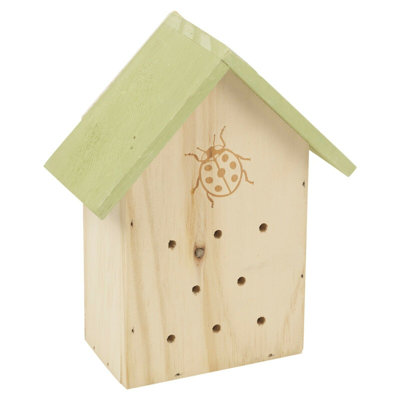
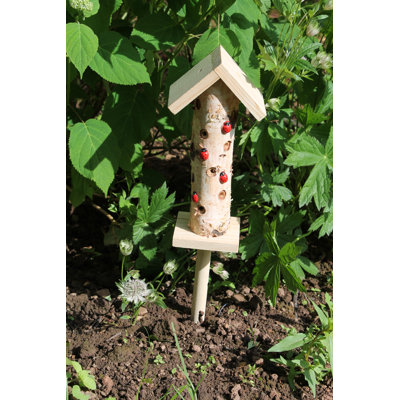
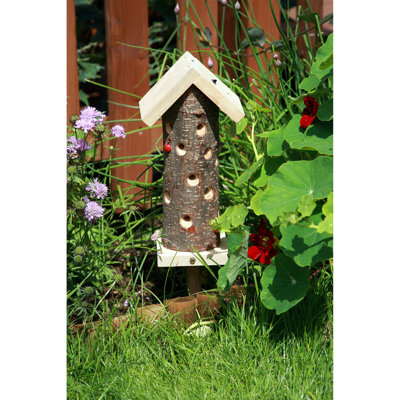
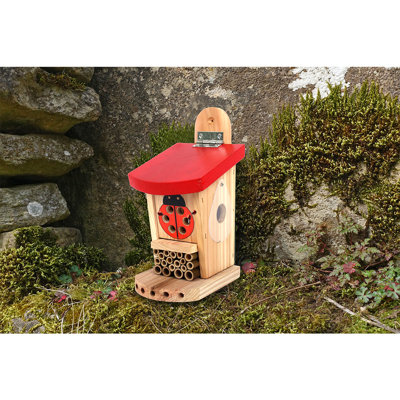
This handcrafted ladybird house to encourage beneficial insects into your garden. This ladybird house provides the ideal nesting habitat for many of the species of ladybirds found in the UK. Ladybirds are the gardener's friend, consuming large quantities of aphids. Can be wall-mounted or located in the ground using the integral ground spike. Ideally, insect houses should be located in a South, South East or South-West facing location in a sheltered position close to, but not obscured by, vegetation. This insect house was designed in collaboration with the UK's leading insect charity - Buglife.
Dawn. Glasgow, GB. Tue Dec 07 2021

By August Grove
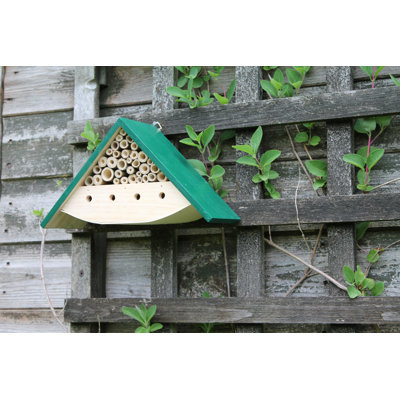
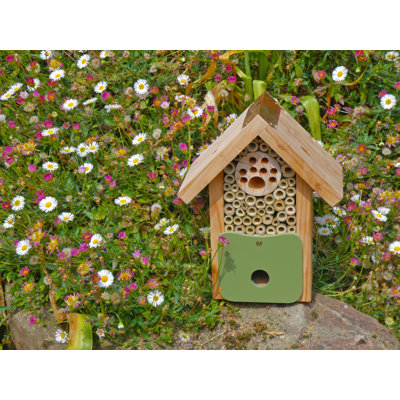
Provide a haven for beneficial pollinators with this charming bumblebee and butterfly house . This home's unique design features a slanted roof with an extended overhang and includes a mounting peg for easy installation. This house will make a delightful addition to any outdoor space.

By Dakota Fields
With this high-quality and professional insect house, you can promote natural pest control and pollination of ornamental and useful plants in your own garden by planting beneficial insects. Due to its high -quality and weatherproof nature, this model is also suitable for professional commercial use. It was manufactured in Europe with a high -quality construction. The insect hotel enriches your garden. Create breeding and wintering places for useful insects with the insect hotel. "Beneficial animals" such as a variety of different wild bee species and digger wasps nest here depending on their own needs.

By Dakota Fields
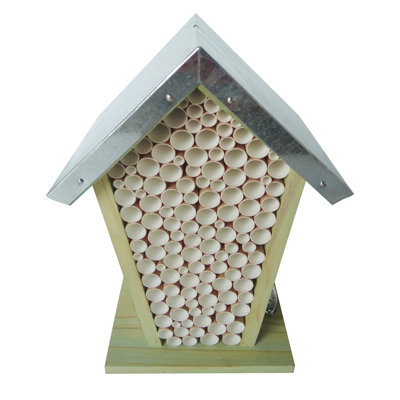
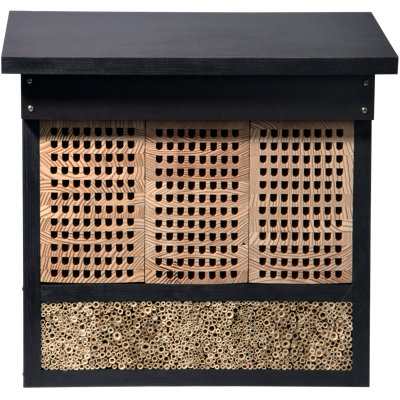
The insect hotel offers you the opportunity to settle many different wild bees directly in your garden. Against the background of changing landscapes with fewer and fewer natural nesting sites and the associated reduction in insect diversity, you can make a valuable contribution to nature conservation. In addition, your garden also benefits from the small inhabitants of the nesting aid, which excel at pollinating your plants and controlling pests. The reed stalks and the shatterproof paper tubes are perfect as a nesting aid for a variety of wild bees. The elaborate design makes the bee nesting aid a real focal point in your garden. The insect hotel is made of sturdy pine wood from FSC®-certified forestry and is very easy to set up. European production is done by hand with a focus on the best quality workmanship.

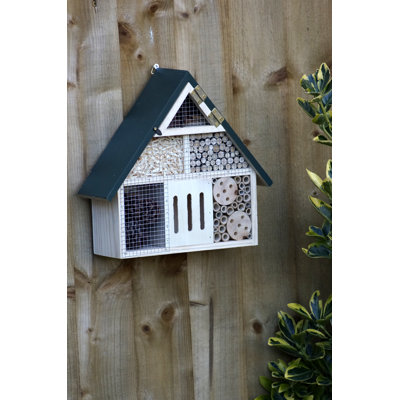
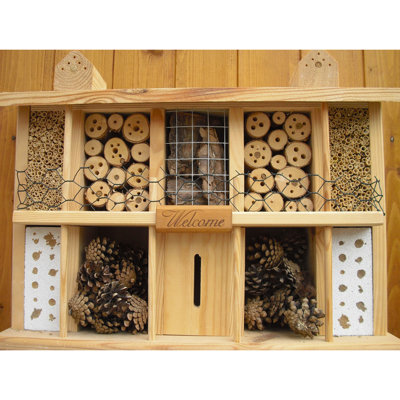
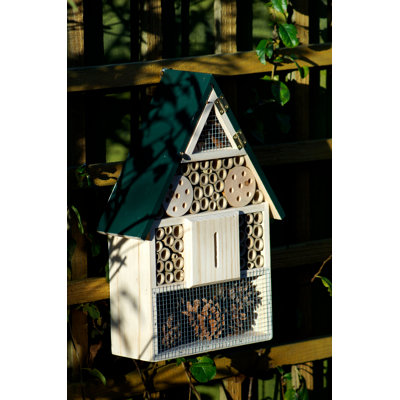
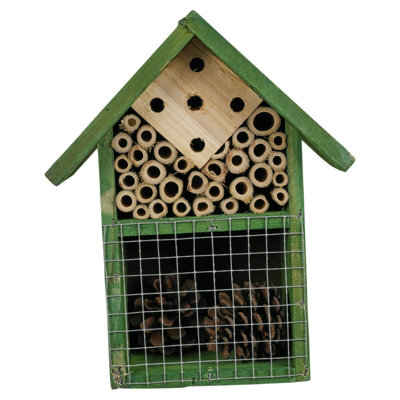
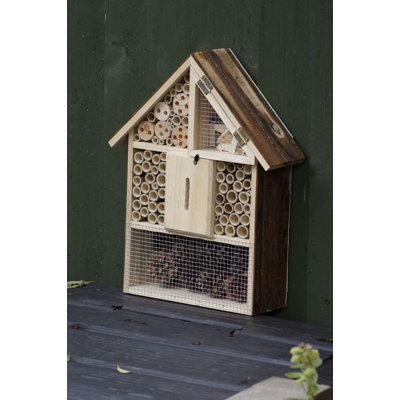
This handcrafted bumblebee house to encourage beneficial insects into your garden. The bamboo tubes provide the ideal nesting habitat for many of the over 200 species of solitary bee found in the UK. They lay their eggs in the tubes which are sealed in with a parcel of food made from either cut leaves or mud. The eggs change to larvae and then pupae which hatch out into new bees the following spring. The chamber with the slotted entrance provides shelter for moths and butterflies, many of which hibernate over winter. The pine cones provide the perfect shelter for ladybirds, the scourge of aphids. The mesh has been designed to permit access to native ladybirds only, and not the slightly larger, invasive Harlequin ladybirds which prey on our natural species. The section with blocks opens so that you can add leaf litter in the autumn, which acts as good overwinter habitat for another predator of aphids, the lacewing. Ideally, insect houses should be located in a South, South East or South-West facing location in a sheltered position close to, but not obscured by, vegetation. This insect house was designed in collaboration with the UK's leading insect charity - Buglife.
Helen. Thu Aug 19 2021

By Dakota Fields
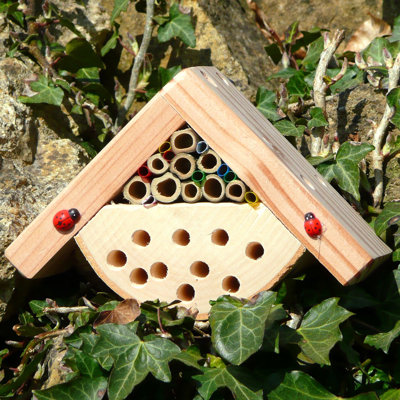
This handcrafted bumblebee house to encourage beneficial insects into your garden. The bamboo tubes provide the ideal nesting habitat for many of the over 200 species of solitary bee found in the UK. Solitary bees hardly ever sting people. They lay their eggs in the tubes which are sealed in with a parcel of food made from either cut leaves or mud. The eggs change to larvae and then pupae which hatch out into new bees the following spring. Ideally, insect houses should be located in a South, South East or South-West facing location in a sheltered position close to, but not obscured by, vegetation. This insect house was designed in collaboration with the UK's leading insect charity - Buglife.

By LUXUS-INSEKTENHOTELS
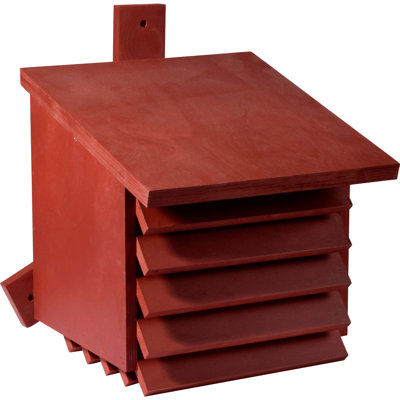
Often underestimated, but welcome by every gardener. Lacewings are inconspicuous beneficial insects that protect your plants from pests in a natural way. Above all, the larvae of the lacewings eat large numbers of aphids and spider mites and are therefore also known as "aphid lions". With this large lacewing box, you can offer the hard -working animals a retreat to spend the winter in your garden. The red colour of the box magically attracts the small insects. In the interior, which is filled with wood wool, they find ideal conditions to survive the cold season. In addition, some other welcome insects, such as ladybirds, also find refuge in this insect hotel. The lacewing house can be attached to trees and house walls using the fold -out mounting strip on the back. The entrance openings on the front and bottom are also protected from wind and rain by the overlapping slats. A wire mesh inside prevents the wood wool from falling out.

By Paper High
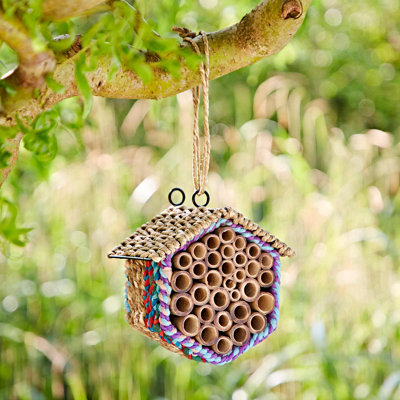
Give solitary bees and other beneficial insects a cosy place to shelter with this beautifully handcrafted bee and bug nester. Perfect for anyone who loves wildlife, this unique nester not only supports local pollinators but also makes a thoughtful, eco-friendly gift.

By Dakota Fields
This handcrafted bumblebee house encourages beneficial insects into your garden. The bamboo tubes provide the ideal nesting habitat for many of the over 200 species of solitary bees found in the UK. They lay their eggs in the tubes which are sealed in with a parcel of food made from either cut leaves or mud. The eggs change to larvae and then pupae which hatch out into new bees the following spring. The chamber with the slotted entrance provides shelter for moths and butterflies, many of which hibernate over winter. The pine cones provide the perfect shelter for ladybirds, the scourge of aphids. The mesh has been designed to permit access to native ladybirds only, and not the slightly larger, invasive Harlequin ladybirds which prey on our natural species. The section with blocks opens so that you can add leaf litter in the autumn, which acts as good overwinter habitat for another predator of aphids, the lacewing. Ideally, insect houses should be located in a South, South East, or South-West facing location in a sheltered position close to, but not obscured by vegetation. This insect house was designed in collaboration with the UK's leading insect charity - Buglife

By Dakota Fields
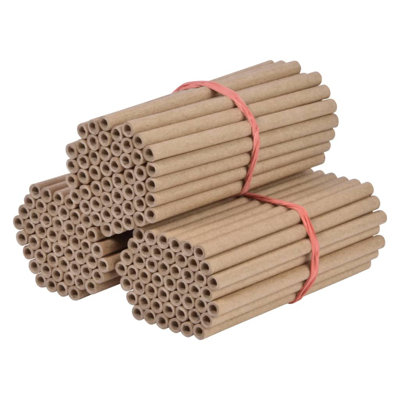
This paper tube set contains about 1200 paper tubes with a length of approx. 12cm, which can be used as natural filling material for insect hotels. The cardboard tubes have different diameters, so that many different species of wild bees and solitary bees can find a suitable nesting box. The set includes 400 x nesting tubes with a diameter of approx. 4mm, 6mm and 8mm. The paper tubes are made of 100% recycled waste paper and are biodegradable, so they can be used safely in your insect hotel. If the apiary is placed correctly, it is only a matter of time before the nesting success becomes visible through the sealed breeding tubes. Delivery includes the "Bee Feast" flowering plant mixture for an area of approx. 5m². The seed mixture contains many different annual flowering plants that are suitable as a food source for wild bees. In this way, they offer useful animals a welcome alternative to the flowering meadows, which have become rare in many places. The paper tubes are made in Germany. On the one hand, this ensures the highest quality and, on the other hand, the short transport routes save emissions.

By Dakota Fields
This beehouse offers the perfect nesting accommodation for several species. A female bee makes in the cardboard straw, several cells with one egg and a mixture of pollen and nectar to feed the larvae. Hang this beehouse in a sunny spot facing.

By Dakota Fields
This handcrafted bumblebee house to encourage beneficial insects into your garden. The bamboo tubes provide the ideal nesting habitat for many of the over 200 species of solitary bee found in the UK. They lay their eggs in the tubes which are sealed in with a parcel of food made from either cut leaves or mud. The eggs change to larvae and then pupae which hatch out into new bees the following spring. The chamber with the slotted entrance provides shelter for moths and butterflies, many of which hibernate over winter. The pine cones provide the perfect shelter for ladybirds, the scourge of aphids. The mesh has been designed to permit access to native ladybirds only, and not the slightly larger, invasive Harlequin ladybirds which prey on our natural species. The section with blocks opens so that you can add leaf litter in the autumn, which acts as good overwinter habitat for another predator of aphids, the lacewing. Ideally, insect houses should be located in a South, South East or South-West facing location in a sheltered position close to, but not obscured by, vegetation. This insect house was designed in collaboration with the UK's leading insect charity - Buglife.
By Dakota Fields
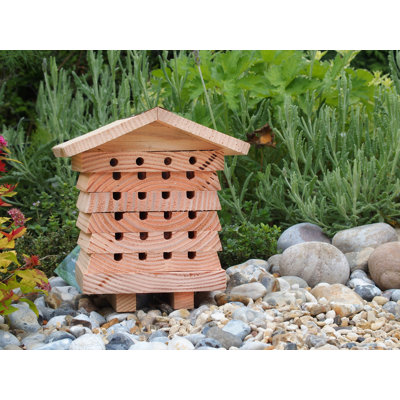
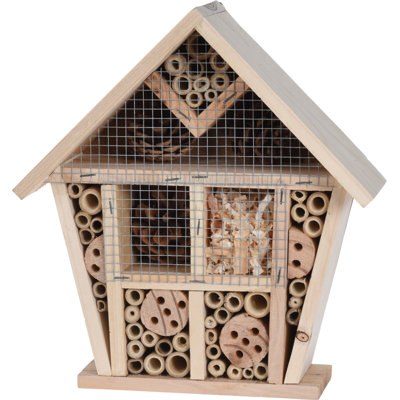
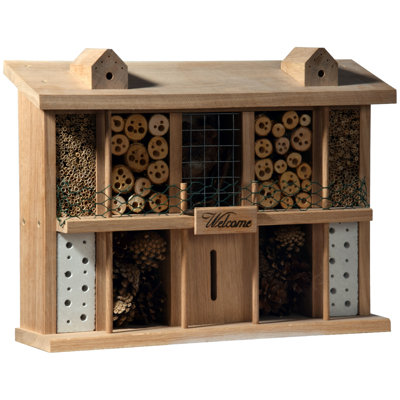
The insect hotel "Monschau" offers you the possibility to settle many different wild bees directly in your garden. Against the background of changing landscapes with fewer and fewer natural nesting sites and the associated reduction in insect diversity, you can make a valuable contribution to nature conservation. In addition, your garden also benefits from the small inhabitants of the nesting aid, which excel at pollinating your plants and controlling pests. The reed stalks, pre -drilled nesting holes and the paper tubes are perfect as a nesting aid for a variety of wild bees. The elaborate design, which is modeled on a classic half-timbered house, makes the bee nesting aid a real focal point in your garden. The insect hotel is made of robust red beech wood from FSC®-certified forestry and is very easy to set up. European production is done by hand with a focus on the best quality workmanship. The external dimensions of the insect hotel are approx. 37.5cm L x 15cm W x 38.5cm H.

By Dakota Fields
The insect hotel offers you the possibility to settle different wild bees and many other beneficial insects directly in your garden. Against the background of changing landscapes with fewer and fewer natural nesting sites and the associated reduction in insect diversity, you can make a valuable contribution to nature conservation. In addition, your garden also benefits from the small residents of the nesting aid, which excel at pollinating your plants and controlling pests. The nesting aid for various insect species can be easily set up in the garden. The beehive is made of sturdy pine wood (Pinus sylvestris, main type of wood) from FSC®-certified ֒ forestry and contains high-quality natural filling materials such as reeds, pine cones, birch branches and wood wool. It is made by hand in a European production process, with a focus on high -quality workmanship. Once inhabited, the "Alabama" insect hotel offers a great view and ensures active crawling and buzzing in your garden.

By Dakota Fields
Rated 4.7 out of 5 stars41 total votes
Be bug friendly with this excellent compactInsect Cottage Hanging/Free Standing House. Made from solid pine wood it has many different environments to tempt a myriad of different insects to choose your garden to set up home, or just to have a rest. A variety of sizes of tubes and holes for solitary bees - one of the best pollinators - and wasps. Vertical slot for butterflies (add diagonal twigs to this for them to hang). Horizontal slots for ladybirds and lacewings. Bark and wood shavings are ideal for ladybirds, earwigs, and ants. Can be hung on a wall or fence or be free-standing.
It was very well made and it was a perfect gift. Lynn. Wakefield, GB. Sat Feb 08 2020

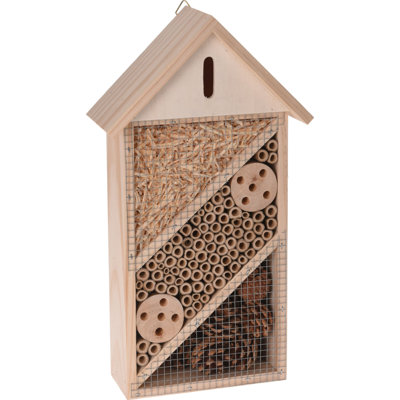
This insect hotel is a perfect environment to attract and provide shelter to insects of all shapes and sizes. It is made from wood and almost looks like a little home. It has many gaps and access points for insects and once get inside the insects are treated to a couple of acorns to keep them coming back. The hotel comes with a hook at the back for hanging. It is perfect for beginners who are interested in wildlife and nature.
Perfect little bug house! My little boy has loved this in the garden!. Georgia. Chesterfield, GB. Wed Jun 10 2020

By Dakota Fields
The butterfly house provides a summer and winter house for butterflies. In summer use the habitat as a butterfly feeder with the nectar-feeding tray folded down to allow butterfly food and sweet ripe fruit to be served to your butterflies. In winter the tray can be folded up to make a cosy over-wintering home for non-migratory butterflies.

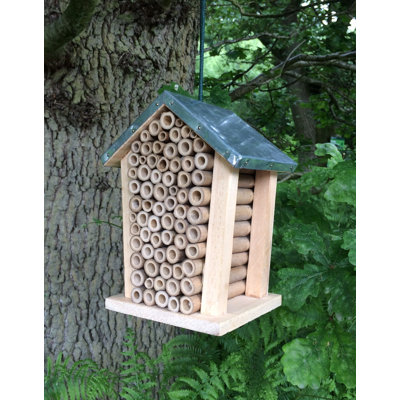
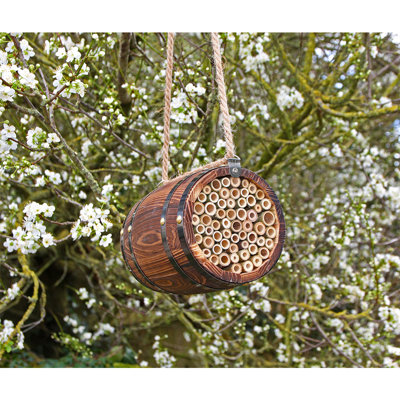
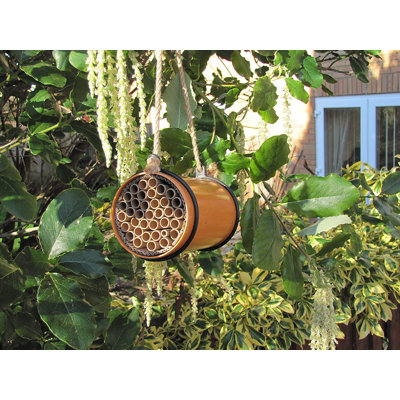
The gift of connects you to the natural world of pollinating bees. Just hang the bee barrel in your garden & watch as the empty canes get filled up with ‘baby bees’ during the Summer months. Then next Spring marvel as the next generation of adult bees emerges to continue the cycle of life. Attracting solitary bees to the garden is not only safe but beneficial to the pollination of flowers, fruit and vegetables. Solitary bees are born pollinators! The hole sizes of this bee barrel are perfect for non-swarming bees like the Red Mason Bee, Leafcutter Bee and other solitary bees. These friendly bees are industrious and safe around children and pets as they are unlikely to sting.
Very good quality and looks very nice!! Lovely decoration in my garden - just waiting for bees to make it their home ). Sylwia. Bristol, GB. Sat May 30 2020

Our natural wood bug hotel attracts all kinds of garden insects, keeping them safe and warm throughout the seasons. A hotel is a vital part of the ecosystem and each insect has its own special requirements when finding a safe place to live, which is why our insect home is the perfect choice for you. The hotel is a suitable home for all kinds of minibeasts, ladybirds, bees, spiders, and woodlice with its natural wood and firm posture. This readymade bug hotel is a safe space for invertebrates to shelter, hibernate, lay their eggs, raise their young and seek refuge from predators. You can hang this from a nail or screw or stand this on a flat surface away from strong winds to ensure this stays in an upright position.
By Dakota Fields
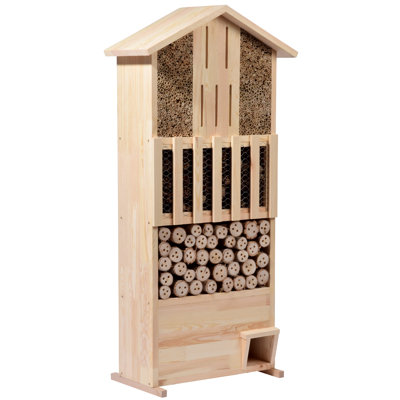
This large, free -standing insect hotel offers you the opportunity to plant various wild bees, butterflies and many other beneficial insects in your garden. Against the background of changing landscapes with fewer and fewer natural nesting sites and the associated reduction in insect diversity, you can make a valuable contribution to nature conservation. In addition, your garden also benefits from the small residents of the XXL nesting aid, which excel at pollinating your plants and controlling pests. The solid beehive with solid wood back wall is made of robust pine wood (Pinus sylvestris, main type of wood) and contains high-quality natural filling materials such as reed blades, pine cones and branches (birch). In the lower area there is also an integrated hedgehog house, which offers the small animals a safe place to hibernate. European production is done by hand with a focus on the best quality workmanship. Whether in the garden or on the balcony, this XXL beehive is a great sight and ensures active crawling and buzzing in your garden.

By Dakota Fields
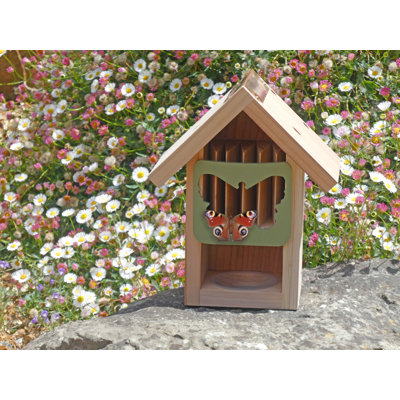
This butterfly house providing a safe home for many types of butterflies. Part of the charming new barn range, the pretty butterfly house provides a safe home for all types of butterflies, moths and lacewings in your garden. designed to attract, not only butterflies but also many other species of pollinating insects to take shelter and create their homes in the various crevices. Many other insects may feed on the butterfly house if you fill-up the reservoir at the bottom with a solution of butterfly food. Recipes can be found for this online. The recycled plastic door swivels, allowing access to the nesting compartment for cleaning and to carefully observe species during cooler weather. Produced from sustainably managed, FSC certified wood, with a recycled second-life plastic frontage, this butterfly house comes in an attractive gift box and is easy to put up and care for. This product is produced from sustainably managed forests and the plastic board used is recycled.

By Dakota Fields
Most species of bees are solitary in nature and do not form hives and colonies like honeybees. Likewise, many insects prefer to find solace in old cavities in plant stems or underground. These bees, insects and other wildlife are extremely important to the habitat and garden, providing important services like pollination. The bee and insect hotel range provides safety, shelter and habitat for a full range of bees, insects and other small wildlife including spiders.

By Dakota Fields
The insect hotel offers you the possibility to settle different wild bees and many other beneficial insects directly in your garden. Against the background of changing landscapes with fewer and fewer natural nesting sites and the associated reduction in insect diversity, you can make a valuable contribution to nature conservation. In addition, your garden will also benefit from the small inhabitants of the "Country Seat Superior", who excel at pollinating your plants and controlling pests. The solid beehive is made of particularly robust oak wood (Quercus robur, the main type of wood) and contains high-quality natural filling materials such as reeds, pine cones, pine bark, pieces of the branch (birch), as well as two solid Ytong stones. European production is done by hand, focusing on the best quality workmanship. Whether set up or hung up, the "Country Seat Superior" offers a great view and ensures active crawling and buzzing in your garden. The external dimensions of the insect hotel are approx. 47cm L x 12.5cm W x 34cm H.

By Dakota Fields
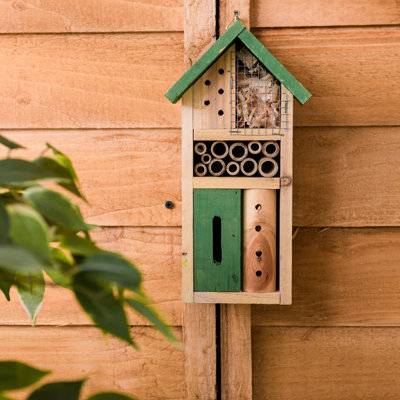
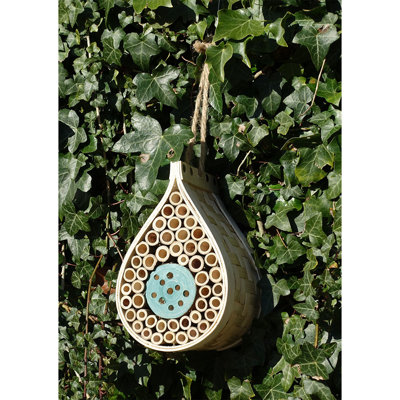
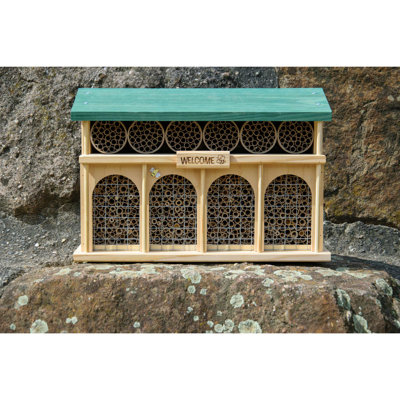
The bee & bug house provides nesting tubes for solitary bees and shelter for other beneficial insects in your garden. The bee & bug house is made from FSC certified timber with a decorative woven bamboo finish around the sides of the bee & bug house. The centre contains bamboo nesting tubes and a pretty aqua blue drilled log ideal for solitary bee nesting. The bee & bug house house should be hung in a sheltered sunny position, preferably catching some early morning sun which will warm the emerging adult bees when they hatch out in springtime.

By Brambly Cottage
Wooden Insect Hotel Featuring Lots Of Spaces For Bugs And Garden Critters To Explore And Nest In.

By Dakota Fields
Bobby’s bug box is a small functional habitat specifically designed for children. It has canes and drilled holes to provide homes for different garden bugs and pollinators. The bug box provides overwintering habitat for insects like ladybirds. Ladybirds are the gardeners’ friends and eat aphids. Additionally, it is a home for the young of gentle solitary bees who are wonderful garden pollinators. Hang your bug box using the metal loop and observe who comes to stay? Bobby’s bug box comes in a gift box. Also included is a magnifying glass and activity book all about bugs. It makes an ideal present for budding conservationists! Made using sustainable FSC certified timber from carefully managed forests.